Why New Tools Always Face Resistance
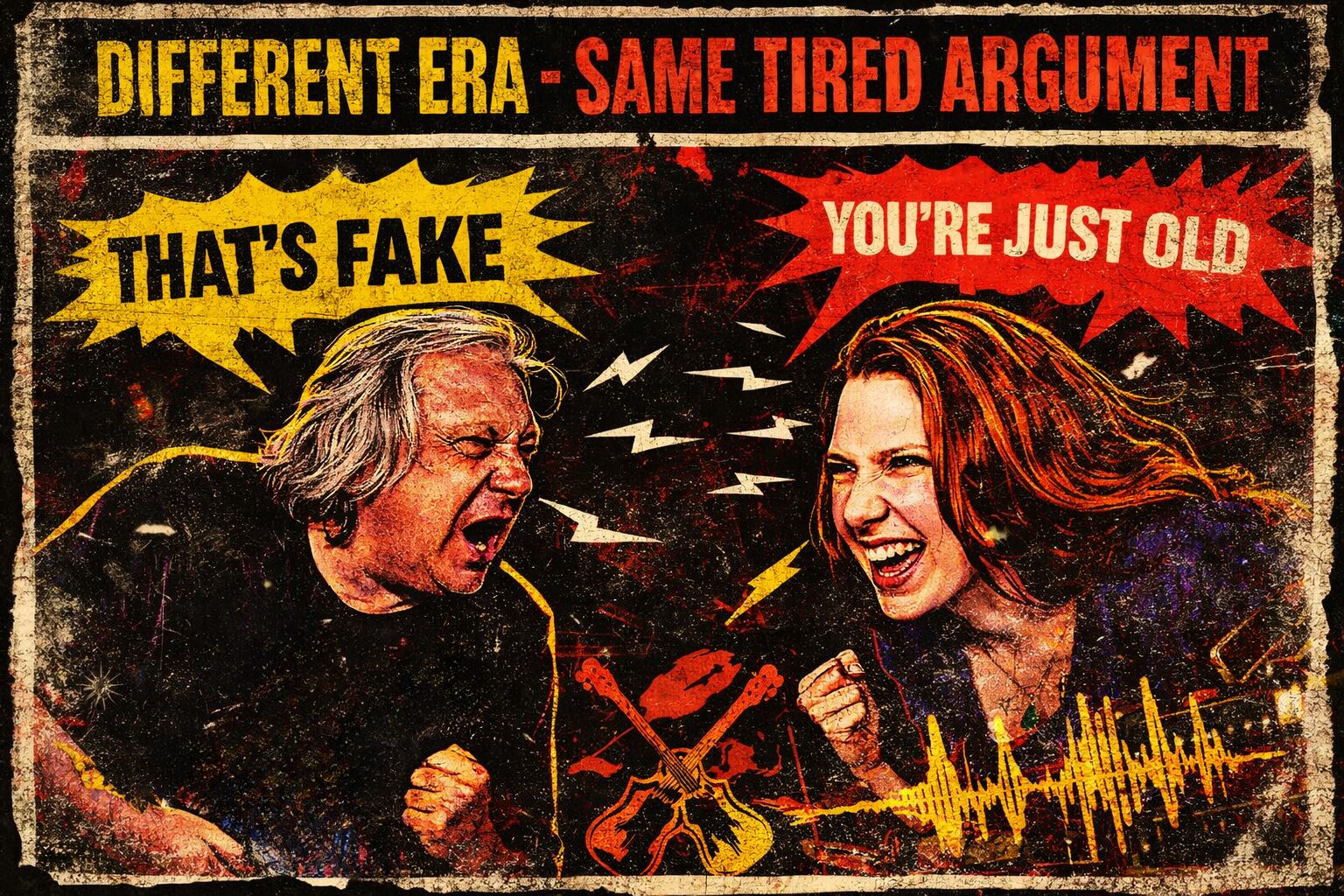
Every era of art produces the same argument.
Somewhere, someone insists that the newest tools are somehow less legitimate. Less authentic. Less artistic than what came before.
It’s a persistent myth — the idea that “real” art must be made using older methods, older instruments, older techniques.
But history suggests something very different.
The tools artists use have always evolved. And almost every time a new tool appears, it faces the same early reaction: suspicion.
Innovation rarely arrives with universal applause. It usually arrives with criticism.
And only later, with time, does it become part of the craft itself.
When Innovation Looks Like Cheating
Photography provides one of the clearest examples.
When digital photography first began replacing film, many traditional photographers insisted the new medium could never match the artistic integrity of film. Digital cameras were dismissed as convenient but inferior. Film was considered the true craft.
Then came editing software.
Programs like Photoshop allowed photographers to adjust lighting, color, contrast, and composition in ways that had once required elaborate darkroom techniques. Critics argued that digital editing made photography dishonest — that it allowed artists to “fix” mistakes rather than master the discipline.
Today, those arguments sound almost quaint.
Digital photography is now the dominant medium. Image editing is widely understood as part of the artistic process. What was once seen as a shortcut has become a standard tool.
The art didn’t disappear.
The tools simply changed.
Music Has Followed the Same Pattern
Music history is filled with similar moments.
When synthesizers first entered popular music, many musicians dismissed them as artificial. Electronic instruments were said to lack the warmth and soul of traditional instruments. Some critics believed synthesizers would replace musicians entirely.
Instead, synthesizers expanded the palette of sound.
Entire genres emerged from experimentation with electronic instruments. Sounds that once felt strange or unnatural eventually became defining elements of modern music production.
Even vocal processing has gone through this cycle.
When Cher released Believe in 1998, the heavily processed vocal effect shocked listeners. Some critics treated it as a gimmick or an artificial distortion of the human voice.
Yet the sound became iconic.
What began as a controversial experiment soon influenced an entire generation of artists and producers. Today the effect is remembered not as a mistake but as a milestone in pop production.
Innovation has a way of becoming tradition once enough time passes.
The Electric Guitar Controversy
When the Electric guitar first appeared in the 1930s and 40s, many musicians considered it artificial.
Traditional jazz and classical players believed music should come from pure acoustic instruments.
Amplification was seen as:
- mechanical
- unnatural
- a shortcut
- not “real musicianship”
The argument sounded extremely familiar to modern debates.
Critics said amplification allowed musicians to hide behind technology instead of skill.
The Bob Dylan Incident
The most famous backlash came decades later.
In 1965, Bob Dylan performed with an electric band at the Newport Folk Festival.
The reaction from parts of the audience was immediate.
He was booed.
Some fans believed he had betrayed folk music by using electric instruments.
They saw it as commercial, inauthentic, and technologically corrupted.
What Happened Next
Within a few years, electric instruments became the foundation of rock music.
Artists like:
- Jimi Hendrix
- Eric Clapton
transformed the electric guitar into one of the most expressive instruments in music history.
What had once been criticized as artificial became a symbol of musical authenticity and rebellion.
Art Evolves Through Experimentation
Creative tools rarely arrive fully understood.
Artists explore them, misuse them, stretch them beyond their intended purpose. Sometimes the results are awkward or strange at first. But experimentation is exactly how new artistic languages emerge.
Many of the sounds, visual styles, and production techniques we now consider normal began as unusual experiments.
The history of art is not a story of preserving every rule exactly as it was.
It’s a story of artists exploring what new tools make possible.
The Constant Behind the Tools
While tools change, the creative impulse behind them remains the same.
Artists are still trying to do what they’ve always done: take something imagined or felt and bring it into the world in a form others can experience.
Whether that happens with film or digital cameras, analog instruments or electronic ones, traditional studios or modern production environments, the goal hasn’t changed.
Only the instruments have.
And every generation eventually learns the same lesson.
What once looked like a shortcut often becomes the next chapter of the craft.
No responses yet